Our first project

Hope for Jojo

Hope for Jojo is Rare Break's first project: a gene-editing therapy designed for Jojo's SCN8A mutation, and a playbook for the children who come next.

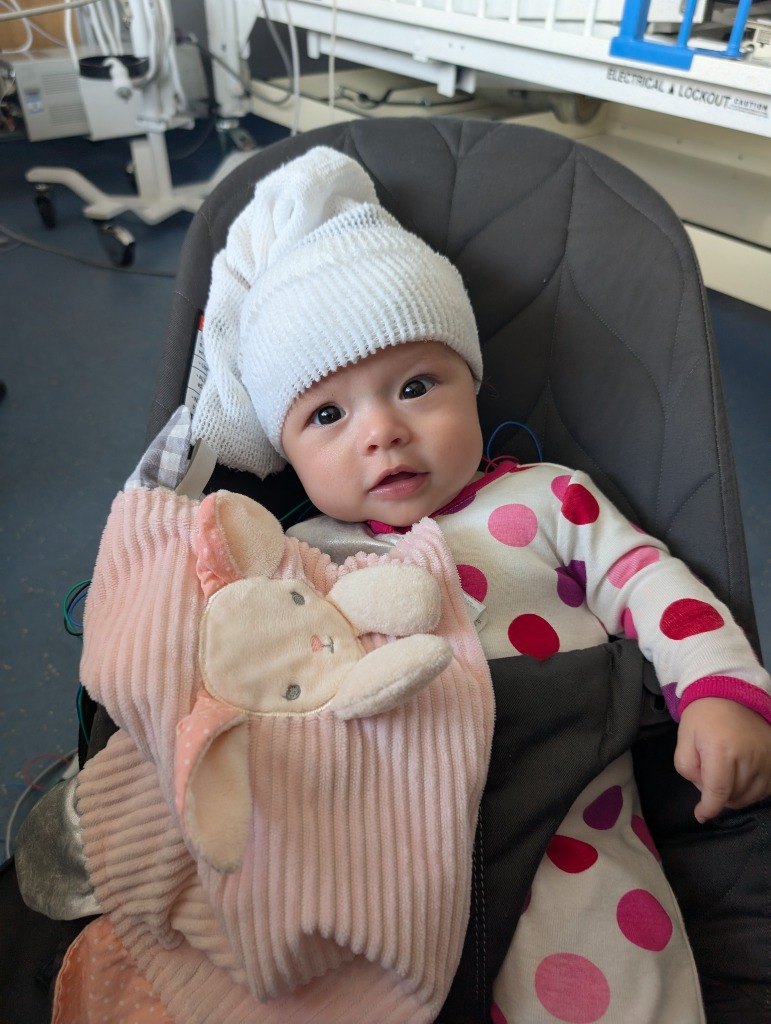
Baby Jojo in polka-dot pajamas and a white EEG cap, holding a pink bunny and looking at the camera

Jojo's story

Meet Jojo

Anyone who meets Jojo says she's magnetic. When she locks eyes with a stranger, her face lights up, her eyes glimmer, like she's just won a big prize, and the prize is time with you.

She was also born with SCN8A, a severe genetic epilepsy. When she has a seizure, she stops breathing, goes limp, and turns blue, and we pray she'll breathe again. Not every child with SCN8A does.

We still remember the silence as the ICU team quietly left the room after Jojo stopped breathing and had to be resuscitated. They left so the two of us could hold our baby and cry, because we all knew in that moment that this wasn't just an everyday seizure anymore.

She was in the hospital at least 10 times in her first year. Today she takes three medications, seven doses a day, and has 15 hours of appointments and therapy every week. She still wakes up every hour or two at night.
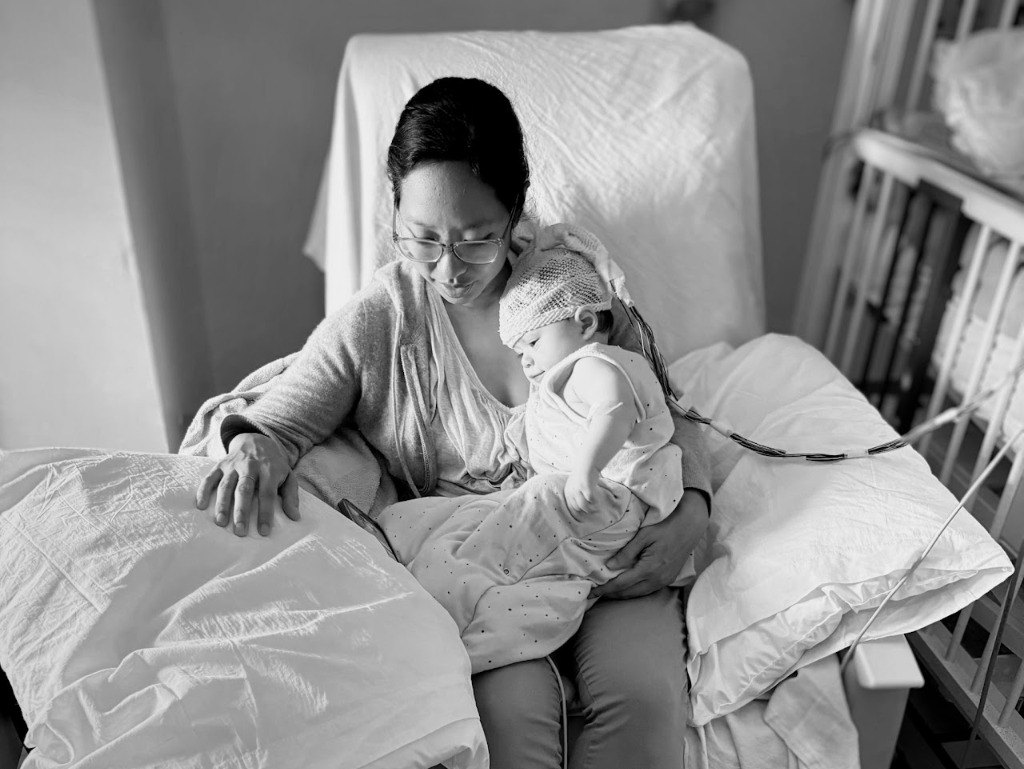
Black and white photo of Jojo's mom holding her in a hospital chair while Jojo wears an EEG head wrap
Jojo and her mom during one of her hospital stays.

On a good day now, Jojo is run, run, running around the park, laughing and stopping for family hugs. She points to a fleeting bird, shouts “con chim non!” and bursts into giggles. She claps for herself, proud that she made it up and down the slide all alone. And we get to watch her see the world for the first time.

The disease

What SCN8A does

SCN8A attacks a child's developing brain. Children can lose skills they've already learned, even the ability to play, and many never walk, talk, or eat on their own. Too many don't get to grow up.

Jojo's SCN8A is caused by a “rare break” in her DNA: a single-letter typo so rare that only a few dozen children worldwide are known to have it. Diseases this rare almost never attract pharmaceutical investment, so the research depends on families and on people like you who choose to step in.

Hard-to-control seizures

Seizures often start in the first months of life and can be hard to control with medication. During a seizure, a child can stop breathing.

Developmental delays

Children can lose skills they've learned, and many never walk, talk, or eat on their own.

Round-the-clock care

Families manage medications, therapy, hospital stays, and broken nights, often for years.

The plan

Scientists at the Innovative Genomics Institute, Jackson Laboratory, and other partners are working on an 18 to 24 month plan to develop an SCN8A therapy. An SCN8A gene editor is built and in testing, a custom mouse model has been created, and manufacturing prep is funded.

See the roadmap and progress

Ways to give

Help fund the SCN8A therapy

Give online through our secure portal, or save on fees by giving through your employer, a donor-advised fund, or check.

Give online

Secure checkout through Rare Village Foundation, our fiscal sponsor.

Choose an amount
Frequency

$150 buys lab supplies for making a guide RNA, the molecule that steers the editor to the SCN8A mutation.

Give $150

Tax-deductible through Rare Village Foundation, a 501(c)(3).

Employer match and Benevity

If your employer uses Benevity, giving there (especially through payroll) saves us transaction fees, and your employer may match your gift. Search for “Hope for Jojo” or “Rare Village” and select our project. See an example

Donor-advised funds

From Fidelity, Schwab, Vanguard, and others. Make the grant to our fiscal sponsor, Rare Village Foundation, and write “Hope for Jojo” in the designation or purpose field. See an example

Check or stock

Email gifts@rarebreak.org and we'll send instructions. You'll receive a receipt for your tax records.

All donations are tax-deductible through our 501(c)(3) fiscal sponsor, Rare Village Foundation.